Safety Spending: Three Scenarios, Three Different Calculations
There's no single answer to "how much should you spend on safety." After six years managing procurement for a 140-person manufacturing operation — roughly $180,000 in cumulative safety-related spending — I've stopped pretending there is. It depends.
The variable that actually matters is consequence severity. Low-probability, high-severity situations justify different spending than high-probability, low-severity ones. And the regulatory picture changes everything.
So I break safety spending into three scenarios. Each has different math. Here's how I think about them.
Scenario A: Workplace PPE — compliance sets the floor, comfort determines ROI
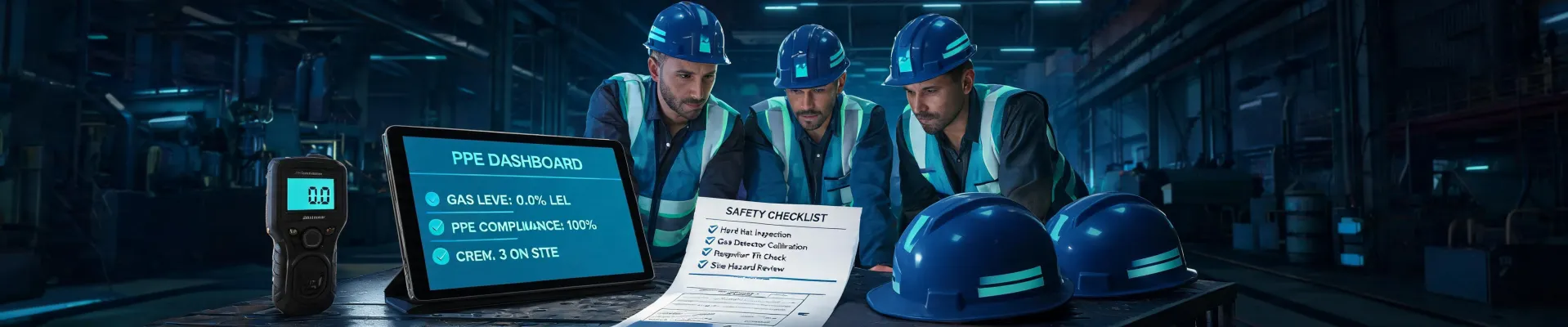
This is where most of my safety budget goes, and it's the most straightforward scenario. Occupational safety has a regulatory floor: ANSI Z87.1 for eye protection, OSHA 1910.133 for employer obligations. You don't get to skip those requirements, so the question becomes which compliant option delivers the best total cost of ownership.
My approach for safety eyewear: start with compliance, then filter by whether workers will actually wear the things. A $12 pair that sits in a locker costs more than a $20 pair that gets worn. I learned that the hard way in early 2022 when we rolled out a batch of basic safety glasses that fogged constantly in our humid finishing area. Workers took them off. That defeats the whole point.
It took me about two years of quarterly reorders to realize that the cheapest compliant option usually isn't the lowest total cost — because wear rate and comfort drive replacement frequency. If workers remove their glasses, you're replacing them faster and accumulating risk.
When I re-evaluated in Q3 2022, I tested samples from six vendors over about three weeks. The Edge Eyewear Delano G2 safety glasses ended up on our approved list because the anti-fog coating held up in our actual conditions — not because the spec sheet looked good. We also added the Edge Eyewear Robson safety glasses for outdoor work, since the polarized lens option reduces glare on the loading dock. (If you're searching supplier catalogs, the brand sometimes shows up as edge-eyewear — same line, just a formatting quirk.)
Here's the cost math that matters: workplace eye injuries cost U.S. employers an estimated $300 million annually in medical costs and lost productivity, according to Bureau of Labor Statistics data. A single claim can exceed a year's PPE budget. The prevention calculus is obvious.
But don't confuse "safety" with "spending more." We don't buy polarized for indoor assembly. We don't buy the most expensive frames. We buy the right feature set for the specific hazard. And honestly, the vendor relationship matters more than the vendor's product catalog. When our main supplier had a stock issue in 2023, having a second pre-vetted source saved us a week of downtime. That's not on any spec sheet.
Scenario B: Home and facility safety — where the risk is emotional, not regulatory
This is a different puzzle. Nobody's issuing OSHA citations for your home. But the stakes can still be high.
Take stair railing. The International Residential Code requires handrails on stairways with four or more risers. If you're installing stairs in a facility or renovating an older building, that's a code requirement (this was the case as of the 2021 IRC, at least). But the real reason to spend on a solid railing isn't code — it's that falls are the leading cause of injury-related emergency department visits for adults over 65, per CDC data. A $200 railing vs. a hip fracture that can run into tens of thousands in medical costs and lost independence. Not a close call.
Baby fence installations follow similar logic but with a shorter time horizon. Your kid uses a gate for two or three years, not twenty. So the cost-per-use math is different. My approach: buy mid-range with a recognized safety certification, not the cheapest and not the premium. I spent about $80 on ours in 2023 after reading through a dozen reviews and checking the JPMA certification. The $40 option had known latch failures. The $200 option was nicer looking but functionally identical.
Where people get this wrong is over-insuring the low-risk stuff while neglecting the obvious hazards. I've seen home offices with $400 ergonomic chairs and zero stair railing on a steep basement staircase. That's solving the wrong problem. And the "premium" version of most home safety equipment isn't meaningfully safer than the mid-range — you're often paying for aesthetics. Which is fine if you value aesthetics. But don't tell yourself it's a safety upgrade.
Scenario C: Personal protection — where the hidden cost is legal, not material
The third scenario is personal safety tools. Pepper spray is the obvious example, and it's the one where I've seen the most expensive mistakes — not because the product is expensive, but because people don't check the law.
Is pepper spray legal in New Jersey? Yes, but with specific restrictions. The container must be 3/4 ounce or less. It can only be purchased in person from a licensed retailer — no online ordering, no mail delivery. If you buy what looks like a great deal online and have it shipped to a NJ address, you may have technically violated the law. The "savings" from the online purchase don't look like savings when you factor in the legal exposure.
This is where TCO thinking really matters. For most consumer safety purchases, the hidden cost is maintenance or durability. For regulated items, the hidden cost is compliance. That changes the shopping list entirely. And the same logic applies across state lines — what's legal in one jurisdiction may not be in another. Before you buy, verify the current rules in your state as of the purchase date.
One more thing on this scenario: the product itself is usually cheap. A compliant pepper spray runs $10–20. The cost isn't the item. The cost is doing the research to make sure the item is legal, appropriate, and sufficient for the actual risk. That's the "insurance" you're paying for.
Which scenario are you in?
The three scenarios aren't mutually exclusive — most operations deal with at least two. The way to figure out where to focus your spending is to ask three questions:
Is there a regulatory requirement? If yes, comply first. The cost of non-compliance usually dwarfs the cost of the equipment.
Is there a vulnerable person at risk? Children, older adults, workers in high-hazard environments. The consequence severity justifies spending.
Is there legal ambiguity? Regulated safety items, like pepper spray, require verification before purchase. The hidden cost of getting it wrong is compliance risk, not product quality.
Here's the checklist I use: regulatory floor first, then consequence severity, then duration of use. That's the priority order. Three items. In that order.
The pattern holding all three together is the same one that's saved me the most money over six years: prevention is cheaper than correction. A $20 set of compliant, comfortable safety glasses — whether it's the Delano G2, the Robson, or something else that fits your specific conditions — beats a $3,000 injury claim. A $200 stair railing beats a hospital visit. A $15 pepper spray purchase with five minutes of legal verification beats an expensive mistake.
It took me about four years and a couple of costly reworks to understand that the "cheapest" option is only cheapest when you do the math correctly. Most people don't. That's where budgets go wrong.

Mariko Sato
Mariko Sato is a workplace emergency-response equipment analyst covering industrial first-aid kits, AEDs, eyewash stations, emergency showers, burn kits, spill kits, bloodborne-pathogen kits, and fire extinguishers. She references ANSI Z308.1, ANSI/ISEA Z358.1, IEC 60601-2-4, and NFPA 10 while examining supply class, treatment capacity, activation time, flow rate, tepid-water delivery, shock energy, inspection interval, extinguisher rating, and placement distance. Her guides help EHS managers, facility teams, clinics, warehouses, and buyers plan equipment quantities, locations, maintenance, replenishment, responder access, and compatibility with site-specific emergency scenarios.