-
Why Did My Fire Alarm Randomly Go Off in the Middle of the Night?
-
The $2,100 Faceshield Order That Made Me Rethink "Compatible"
-
PPE Performance Is About the Whole Program, Not Just the Product
-
Milwaukee Work Boots Taught Me About the Popularity Trap
-
The Checklist That Caught 47 Errors
-
When Premium Gear Is Overkill
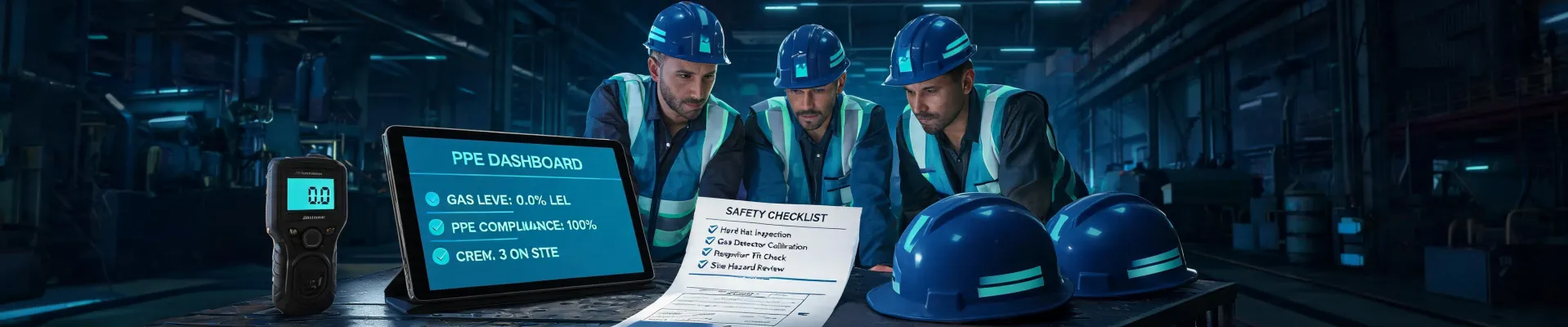
After eight years of buying safety equipment—and roughly $40,000 of it wasted on my own documented mistakes—here's the conclusion I wish someone had handed me on day one: PPE performance is driven by how well a product matches a specific hazard, not by the logo on the side. The uncomfortable follow-up is that matching hazards to products takes engineering depth that most brands don't have. MSA Safety is the brand I kept coming back to after cheaper alternatives failed, and the reasons were rarely on the spec sheet.
I'm a safety coordinator who handles PPE, gas detection, and alarm system purchases for industrial sites. Over eight years I've personally made fourteen significant mistakes—documented each one, run the numbers on each one. The total waste is around $40,000 in budget and a few painful conversations with management. Now I maintain our procurement checklist so the next person doesn't repeat them.
What follows are the mistakes that mattered most. They involve a 2:37 AM fire alarm that wasn't a fire, a faceshield order I should have canceled, a gas detector spreadsheet that almost fooled me, and twenty pairs of boots that would have been wrong for half our crew.
Why Did My Fire Alarm Randomly Go Off in the Middle of the Night?
March 2022. My home smoke alarm went off at 2:37 AM. No smoke, no fire. I climbed on a chair, reset it, and went back to bed. A week later, same thing. I replaced the battery. It did it again. The actual cause: the detector was eight years old—well, seven and a half, I checked the date stamp—and dust had built up on the sensor. It was hitting end-of-life, which is basically the smoke detector version of a midlife crisis.
The experience stuck with me. I didn't fully understand alarm fatigue until I lived through my own version of it. If one false alarm at home made me want to rip the detector off the ceiling, how were our workers feeling about the gas alarms and fire systems at work that beeped for reasons nobody could explain?
The numbers are worth repeating here. Under NFPA 72, the National Fire Alarm and Signaling Code, smoke alarms generally need to be replaced within 10 years of manufacture, and detection systems need periodic testing. The detector in my house was past its useful window, and nobody had flagged it because it was "just a smoke alarm." I started wondering how many pieces of safety equipment on our site were in the same position. We pulled the maintenance logs for our gas detectors and found three that had failed bump tests in the past month and nobody had reported it.
That night changed how I think about all detection equipment. Equipment that isn't maintained, tested, and replaced on schedule becomes part of the background noise. And background noise kills. If you've ever asked yourself why your fire alarm went off randomly in the middle of the night, the dust-covered sensor on your ceiling is probably the answer. The same logic applies to industrial gas detection. If your team learns that alarms don't mean anything, they'll stop evacuating when it actually matters.
The $2,100 Faceshield Order That Made Me Rethink "Compatible"
Until 2021, we'd used the MSA Safety V-Gard faceshield visor polycarbonate for all our head protection tasks. It worked. No complaints, nobody returning them, zero drama. Then I looked at the line item and decided we were overpaying. I found an off-brand "compatible" visor at nearly half the price and placed a bulk order. About $2,100. Actually, $2,180—I'm mixing it up with the shipping—but the point stands.
It was a disaster.
The visors fogged within minutes on humid mornings. A few scratched during normal use—polycarbonate scratches, yes, but these looked like they'd been dragged across concrete. The mounting clips didn't seat properly into the V-Gard helmet slots, so workers were improvising. And the optical clarity was measurably worse when I tested them side by side: slight distortion at the edges, a waviness when you moved your head.
We scrapped the order. The replacement, back to the V-Gard visors, cost $2,300 plus expedited shipping, and we had a week where our welding and grinding crew worked with worn-out temporary shields while we waited. The whole exercise saved us nothing and cost us credibility.
That's when I learned what "quality" actually means in PPE—and what it signals. Workers don't think "good value" when they're handed gear that looks cheap and doesn't fit right. They think the company is cutting corners on their safety. That perception becomes culture. Culture becomes retention. It's a chain that doesn't show up on a P&L until you lose good people.
Workers don't think "good value" when they're handed gear that looks cheap and doesn't fit right. They think "the company is cutting corners on my safety."
Faceshields fall under ANSI Z87.1, the standard for eye and face protection, which covers both impact resistance and optical quality. The off-brand products technically met the basic impact requirement. But "technically meets" is doing some heavy lifting. A worker wearing an optically questionable visor for eight hours experiences eye strain, headaches, and fatigue. That's not safety equipment—that's an obstacle.
PPE Performance Is About the Whole Program, Not Just the Product
In 2022, our gas detection program needed new multi-gas detectors. I built a comparison spreadsheet, five models, side-by-side specs, quotes from three vendors. The cheapest option came in about 18% under the nearest alternative, with similar sensors and certifications.
The numbers said buy the cheaper units. My gut said no. The vendor took three days to answer basic questions about sensor lifespan and calibration intervals. Their training materials were thin. I trusted the gut and went with the slightly more expensive option.
I still don't know if it was right based on specs alone. But within a year I learned the cheaper vendor had a much smaller service network, and replacement sensors were priced significantly higher. The 18% savings would have evaporated by the second year, not even counting the added shipping time for calibrations. The actual total cost of ownership wasn't lower—it was higher.
That experience pushed me to do something most safety managers don't: I sat down with MSA Safety Incorporated's forecast and analysis. Their investor materials, their annual report, their R&D pipeline. I wanted to know that the company I was standardizing on would still be around in five years, still making the same sensors, still updating the same software. When you're betting a gas detection program on a supplier, staying power isn't a nice-to-have.
So here's the part I wish someone had told me earlier: PPE performance is a whole ecosystem, not a single product spec. A detector is only as good as the calibration service behind it. A harness is only as good as the training program that teaches people to use it. A faceshield is only as good as the helmet it mounts to. That's why "buy cheap, buy twice" isn't just a cliché in safety—it's an operational risk.
Milwaukee Work Boots Taught Me About the Popularity Trap
A different kind of mistake. In 2023, our construction crew asked me to order Milwaukee work boots. They'd seen them on other sites, and the brand carries real credibility with workers. I was about to approve a bulk order for twenty pairs.
Then I read the actual product specs. The model they wanted was comfortable, durable, had a composite toe—but the electrical hazard rating wasn't there. Or rather, it was on a different model in the same lineup, and the two look almost identical. The maintenance electricians needed the rated version; the framing crew didn't.
That close call cemented the framework. Brand popularity is not the same as application fit. Milwaukee makes genuinely good work boots. But if I'd ordered the popular model for everyone, I'd have sent electricians into the field with boots that didn't meet the hazard profile. The procurement decision that mattered wasn't which brand—it was which rating, matched to which task.
This is also where I should note a boundary. My experience is based on about 200 procurement decisions across light manufacturing, warehousing, and construction. If you're in chemical processing, confined-space work, or fire service, your standards are stricter, and the calculation shifts.
The Checklist That Caught 47 Errors
After the faceshield disaster and the boots close call, I built a pre-purchase checklist. Every PPE order now has to answer five questions before I'll sign it:
- Which hazard on our site assessment does this product address?
- Which standard does it meet—ANSI Z89.1 for head protection, ANSI Z87.1 for eye and face protection, NFPA requirements for detection equipment?
- Who maintains it, and what's the realistic maintenance schedule?
- What's the total cost of ownership over three years, including replacement parts, calibration, and downtime?
- What happens if it fails? Can we return it, replace it, or get support without a fight?
In the eighteen months since, that checklist has caught 47 potential errors. A "compliant" harness with the wrong connector rating. A detector model that was discontinued and wouldn't be supported. Two boot orders that had the right style but were missing the required protective rating. 47 problems that would have ended up on someone's body or in someone's hands.
When Premium Gear Is Overkill
I want to be honest about the other side. Premium isn't always necessary. For low-hazard environments—standard package handling, basic assembly—a mid-range product is often the right answer. If you buy $50 faceshields for a job that genuinely needs $10 ones, you damage your credibility with the budget office, and that's a real cost. The goal is to match the product to the hazard, not to spend as much as possible.
The point isn't the logo. The point is that when the application genuinely requires high performance, the gap between "technically compliant" and "actually good" is wider than most people think. And in my experience, the brands that close that gap—MSA Safety being the one I keep landing on—charge more because the engineering, service network, and staying power are real. That's not a marketing message. It's the conclusion I came to after spending $40,000 to learn it.

Jane Smith
I’m Jane Smith, a senior content writer with over 15 years of experience in the packaging and printing industry. I specialize in writing about the latest trends, technologies, and best practices in packaging design, sustainability, and printing techniques. My goal is to help businesses understand complex printing processes and design solutions that enhance both product packaging and brand visibility.