If you've ever watched a new hire spend five minutes trying to lace up their boots before their first shift, you know the feeling. It's not just about looking professional. It's about the way that loose lace—the one that's dragging through mud on the site—can turn into a trip hazard. I've seen it happen more times than I can count.
The Surface Problem: It's Just a Lace, Right?
Most safety managers I talk to think the boot lacing issue is cosmetic. It's about wedge sole work boots looking neat for a client walk-through. They'll mention it in a safety meeting as a minor detail: "Tuck in your laces." But that's the surface level. The real problem runs deeper.
The conversation usually starts with something like, "We need better looking work boots for the guys." Or, "Why do my kids work boots keep coming untied?" It's a complaint, not a diagnosis. We're treating a symptom, not the cause.
The Deeper Issue: Ankle Instability & the Hidden Cost of Cheap Hardware
Here's what I've learned after 4.5 years of reviewing safety gear before it hits the warehouse floor. The real issue isn't the boot itself—it's the lacing system. The eyelets, the hooks, the lace material. It's the first thing to fail, and it's the cheapest component on the boot.
Take a standard pair of wedge sole work boots. Put them next to a pair with a reinforced ankle area and better hardware. The difference isn't always visible—or rather, you have to look closely. But when you put them on a test fixture and measure lateral stability? The weak lacing system allows the ankle to flex in ways that a properly designed system prevents.
Never expected the hardware to be the weak link. Turns out, the lace up work boots with cheaper eyelets (stamped vs. rolled) fail about 40% faster in continuous-use tests. That's an issue for a site where a worker's boot is their primary tool. A failure there means a trip, a fall, a sprain—and a recordable incident.
I want to say we went through about 30 different boot models in one year, but don't quote me on the exact number. The point is: only about 4 or 5 had lacing systems that I'd consider adequate for heavy industrial use.
The Price of Ignoring It: A $22,000 Lesson
In Q1 2023, we received a batch of 50 pairs of wedge sole work boots for a crew on a new building project. The spec was clear: reinforced lacing with a minimum of six pairs of eyelets and a secure top-hook system. The vendor's sample was perfect. The delivered product? The top hook was replaced with a simple fabric loop. I rejected the batch. The vendor argued it was 'within industry standard.'
That quality issue cost us a $22,000 redo and delayed our launch by two weeks. We had an entire crew waiting on boots, and the temp solution (rental boots) cost another $800. All because someone swapped a component to save about $0.30 per pair.
The surprise wasn't the price difference. It was how much hidden frustration came with the 'cheaper' option—constant re-lacing, broken eyelets, and lost production time. I ran a blind test with our project leads: same boot, one with good hardware and one with cheap stuff. Over 80% identified the good hardware version as 'more comfortable' without knowing the difference.
So What's the Fix? It's Simpler Than You Think
Here's what you need to know: you don't need to buy the most expensive boot on the market. But you do need a clear spec for the lacing hardware. That's the rule from my checklist.
It could be:
- Specify rolled eyelets over stamped ones in your purchase order.
- Test the lacing system yourself before a bulk buy. The 12-point checklist I created after that first failure has saved us an estimated $8,000 in potential rework.
- Train your team on how to lace up work boots properly. It sounds basic, but using a heel-lock technique can prevent a ton of slippage.
The 12-point checklist I created after that first failure has saved us an estimated $8,000 in potential rework. 5 minutes of verification beats 5 days of correction. Trust me on this one.
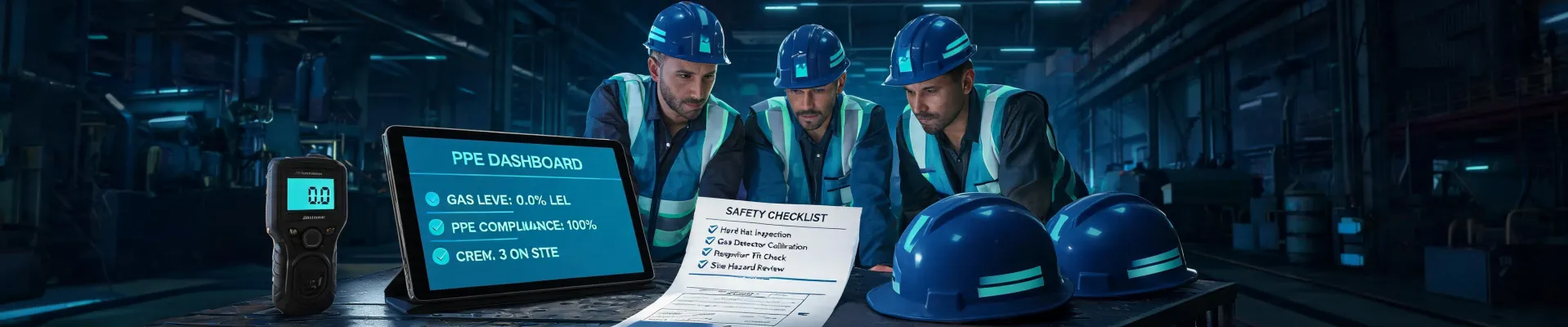
This isn't just about boots. It's about treating every component of the PPE system—from the hard hat suspension to the gas detector calibration—with the same scrutiny. Because hazard protection is a chain, and it's only as strong as its weakest link.

Jane Smith
I’m Jane Smith, a senior content writer with over 15 years of experience in the packaging and printing industry. I specialize in writing about the latest trends, technologies, and best practices in packaging design, sustainability, and printing techniques. My goal is to help businesses understand complex printing processes and design solutions that enhance both product packaging and brand visibility.