Last October, a fire alarm went off in our maintenance shop. Someone yelled, “How do you turn off a fire alarm?” I yelled back, “I don’t know.” I pulled out my phone and typed how do you turn off a fire alarm while the noise was still ringing in my ears. By the time I found an answer, we’d lost half a morning. That was just the warm-up. The main event happened later the same week, when I approved an MSA Safety order without looking at the full total cost.
I’m a safety coordinator for a 60-person industrial maintenance company. I’ve held this job since 2019. I’m not a purchasing agent and I’m not a fire alarm technician. I’m the person who keeps the PPE checklist. The checklist didn’t exist until after this order.
How I ended up in the MSA Safety rabbit hole
We needed 80 replacement hard hats before a quarterly audit. Our regular supplier was backordered on V-Gard helmets, so I searched the distributor’s catalog for “msa-safety” and landed on the V-Gard page. The price was better than the last quote we got. I showed it to my boss and said, “This MSA safety sales pricing is too good to pass up.”
The price was genuinely good. The unit cost was about $3 lower than what we paid in 2023. That felt like a win. I knew I should double-check the accessories on the quote, but I thought, “What are the odds? It’s a V-Gard. MSA takes care of the details.” That is the exact thought that gets people in trouble. The odds caught up with me when the boxes arrived.
The product page showed a V-Gard with an optional hard hat sun shade. I assumed that shade was part of the order. It was not. The quote listed the standard suspension, the logo, the freight charge. There was no sun shade line item. I had glanced at the photo long enough to think, “They’re covered.” They weren’t.
The moment I realized the mistake
The order arrived on time. The shell color was right, the logos looked good, the suspension felt solid. Then one of the outdoor crew leaders opened a box and said, “Where are the sun shades?” I said, “What sun shades?” He pointed at the hard hats. “These are for the road crew. They’re going to be in the sun all week.”
I went back to the quote and read it line by line. The accessories section was empty. I had approved a $2,842 purchase order for 80 hard hats, custom logos, tax, and freight. The missing component was a $16 hard hat sun shade per helmet. 80 times $16 is $1,280. To get them there before the audit, shipping was another $95. So the order that was supposed to save money ended up costing $2,842 + $1,280 + $95, plus two hours on the phone and one uncomfortable conversation with my manager. (Thankfully, the audit didn’t fail, but my credibility took a hit.)
What this has to do with pull on work boots
The same week, I was also comparing pull on work boots for two electricians. The cheap pair was $65. The better pair was $118. The photos looked basically identical. My first instinct was to save $53 per pair. Then I read one review that said the $65 pair lasted about four months on a landscaping route. The $118 pair had a composite toe and a better outsole, and if it lasted ten months, it was cheaper per day. It was also less likely to cause a slip or crush injury. Suddenly, unit price didn’t feel like an actual number.
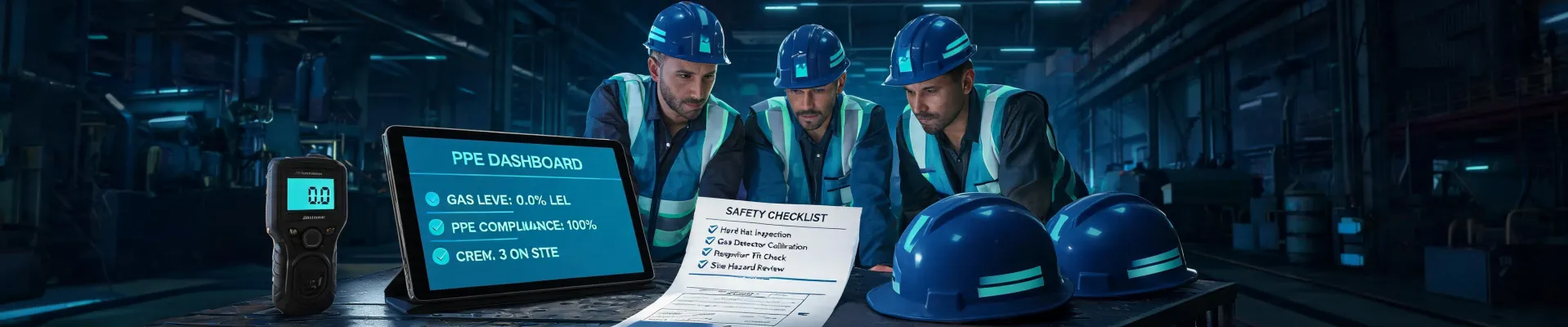
That boot comparison pushed me over the edge. I made a checklist before I ordered anything else. It’s not a fancy tool. It’s a spreadsheet with columns: unit cost, accessory cost, shipping, lead time, extra labor if it fails, safety risk. I put every future PPE order on that sheet.
The total-cost way I think now
If you’re ever in a similar position, don’t assume the quote includes the complete system. The total cost of a safety item is not the price per unit. It’s the price per unit, plus the parts you have to add to make it work, plus the freight for the rush order, plus the hour you spend on hold with support, plus the credibility you lose when a crew stands around waiting for helmets that are “almost ready.”
According to MSA Safety’s published product information, the V-Gard is tested to meet the applicable requirements of ANSI/ISEA Z89.1-2014 for industrial head protection. But meeting the standard and including a sun shade are two different things. Accessory compatibility is listed separately in the product catalog, and it’s worth reading that section before you approve a PO.
I also looked up hard hat sun shade prices again this week, just to make sure I wasn’t exaggerating. As of early March 2025, you can usually find a V-Gard sun shade online for roughly $10 to $18 per hat. Take that with a grain of salt—pricing moves by distributor, volume, and sale period. The point is that I didn’t have the line item on my PO, and that omission had a real cost.
The fire alarm lesson is the same lesson
That morning I typed “how do you turn off a fire alarm” into my phone, I was trying to solve a symptom. The real question was: does my team know this building’s alarm panel, and do we have a procedure? Now, the first item on my pre-check for any new site is exactly that. The fire alarm panel manual lives in a visible spot, and the answer to “how do you turn off a fire alarm” is on a card taped to the wall. It’s usually not as simple as pressing “silence.” It’s a procedure, not a button.
The MSA Safety brand was never the problem. The problem was my assumption that a respected manufacturer’s product page would automatically turn into a complete, safe purchase order. A great hard hat is not a complete helmet system until the right suspension, the right accessory shade, and the right fit are all on the same PO. Same goes for boots. Same goes for fire alarms. The total cost includes the work of remembering every piece, and the cheapest way to do that is a checklist.
If you’re the person who orders safety gear, save this before the next rush order. Look at the quote like it’s a contract, not a catalog. Check the accessory list. Calculate the total cost per day, not just the total cost per item. And please, find the fire alarm panel manual before someone screams the exact phrase I typed.

Jane Smith
I’m Jane Smith, a senior content writer with over 15 years of experience in the packaging and printing industry. I specialize in writing about the latest trends, technologies, and best practices in packaging design, sustainability, and printing techniques. My goal is to help businesses understand complex printing processes and design solutions that enhance both product packaging and brand visibility.