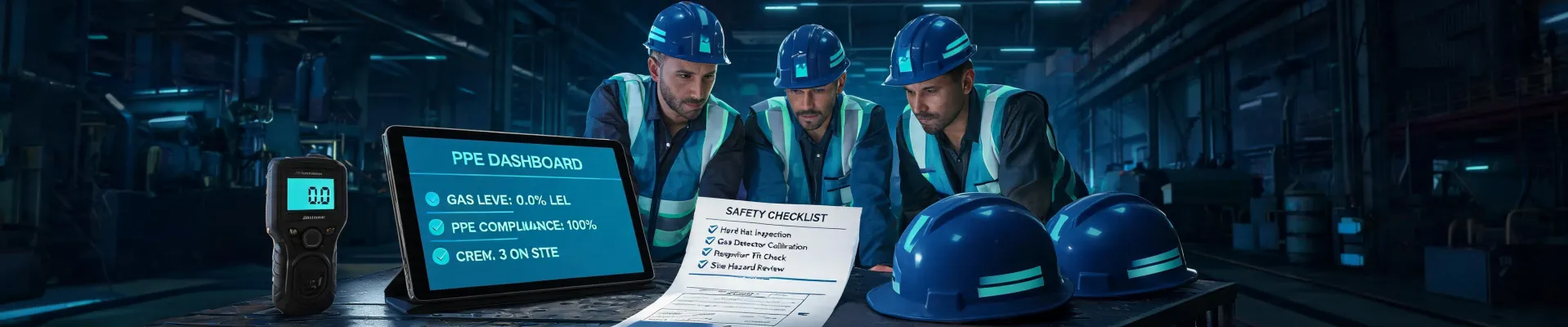
Last September, I stood in our loading bay staring at a pallet that looked perfect. Boxes were clean. The MSA logo was printed on every side. But when I cracked open a carton of V-Gard hard hats, something was off. There was no date code stamped inside the shells. Actually, there was no date code anywhere. I checked a second carton. Then a third. All the same. We rejected all 2,400 units before they got anywhere near a customer.
I'm the quality compliance manager at a regional safety equipment dealer. I review every delivery that reaches our customers—roughly 300 SKUs a year. In 2024, I rejected 6% of first deliveries because of missing certification marks, inconsistent packaging, or storage damage. I don't tell you this to impress you. I tell you because safety equipment is only safe when the details are right.
The day I stopped trusting the box
In 2022, I accepted a batch of harnesses without checking the date codes because we were behind schedule. That was a mistake. The batch turned out to be old stock from a liquidator, and our customer caught it. It cost us an $18,000 redo and a client. I've never made that mistake again.
Here's something vendors won't tell you: certification marks like ANSI/ISEA Z89.1 apply to a product type, not to every individual hard hat. The mark on the shell is a sample of what the design can do. The manufacturing date code lets you trace the specific lot. If a shell has no date code, you can't verify its history. It could be years old, damaged in storage, or a fake. In my book, that makes it a piece of plastic, not PPE.
When the vendor heard about the rejection, they tried to push back.
It's within industry standard.That's not a real standard. There's no standard that excuses a missing date code. We sent the batch back at their cost. Now every contract we sign includes date codes, lot numbers, and certification stickers—on the product itself, not just the box.
MSA Safety: the brand doesn't replace the checklist
You've probably heard of MSA Safety. The company is known as "The Safety Company," and it's been building MSA safety equipment for over a century. Hard hats, gas detectors, fall protection, respirators—they cover a lot of ground. That history matters. It means there's an audit trail, a quality culture, and a reputation that doesn't disappear after you click "buy."
But a reputation doesn't make a specific item safe. I went back and forth between the MSA V-Gard and a cheaper imported hard hat for about two weeks. The import promised the same ANSI rating at 30% less per unit. The V-Gard had an audit trail, replacement parts, and a polymer formula I could verify. Ultimately I chose MSA. A hard hat you can't trace isn't worth the discount.
If you're buying MSA safety equipment, look for the same things I do: date codes, lot numbers, and an authorized dealer. The MSA V-Gard and Skullgard lines are both solid, but they're designed for different hazards. The Skullgard handles high heat environments like steel mills; the V-Gard is a workhorse on construction sites. You don't choose based on the logo alone. You choose based on the standard and the environment.
The footwear question: On Cloud work boots vs. real non-slip work boots
Last month, a safety manager asked if his crew could use On Cloud work boots on a site. On Cloud makes comfortable shoes; I get it. Their running shoes basically feel like socks. But work boots are a different category. Non-slip work boots should meet something like ASTM F2913 for slip resistance, and ASTM F2413-18 for foot protection if you're around crushing hazards. If a boot doesn't have a rating or a data sheet that backs it up, it's just a shoe with a rugged look.
To be clear, MSA Safety doesn't make boots. I'm bringing them up because PPE programs don't work when footwear is an afterthought. Don't take my word for it—check the label. The problem I see again and again is people buying non-slip work boots based on the tread pattern alone. I've seen treads that looked aggressive but performed worse than a polished floor in the slip test. That's why I ask for the test report, or at least the mark on the tongue or insole. It's not bureaucracy. It's physics.
Fire detection: the question property managers keep asking
A facilities manager at a property group called APPC Property sent me an email with the subject line "which fire detection system should i buy appcproperty." It was typed fast, but the question is common. People want a one-sentence answer. I don't have one.
For a commercial property, the system depends on the layout, the hazards, the local code, and the response capability. A smoke detector in a kitchen can false-alarm constantly. A heat detector might be better near cooking equipment. A carbon monoxide detector should be in areas with combustion appliances. That's not a product choice—it's a risk assessment. The most expensive detector in the world won't help if it's in the wrong place.
NFPA 72 is the standard that covers fire alarm systems, and OSHA's 29 CFR 1910.157 covers portable fire extinguishers. If a property manager says "just buy any detector," ask them to put that in writing. Because when something goes wrong, the documentation is what matters. At least, that's been my experience with commercial buildings.
The real cost of safety
Here's the part that ties it together: the cheapest quote is rarely the cheapest final cost. I've learned to ask "what's NOT included" before "what's the price." Is the suspension included? Are the brackets included? Is the calibration certificate included? Is shipping included? Add up the extras and the missing date codes and the re-testing, and the so-called savings disappear.
That pallet taught me more about safety equipment than any brochure. Safety isn't a brand name or the thickness of a shell. It's a system: helmets, boots, detectors, training, inspection, and the willingness to reject something that doesn't meet spec. MSA Safety makes good products. But the reason I trust them is the documentation and the track record, not the logo. If a vendor can't show you the same, then don't buy the excuse. Buy the proof.

Jane Smith
I’m Jane Smith, a senior content writer with over 15 years of experience in the packaging and printing industry. I specialize in writing about the latest trends, technologies, and best practices in packaging design, sustainability, and printing techniques. My goal is to help businesses understand complex printing processes and design solutions that enhance both product packaging and brand visibility.