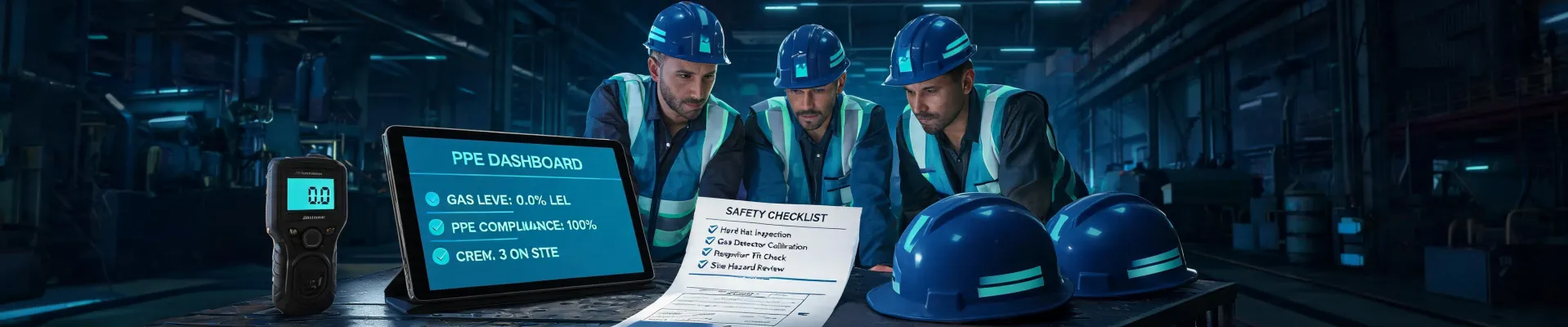
My first rule of emergency response is not what most people expect: the most expensive safety brand is not automatically the safest. The safest option is the product that fits the worker, fits the hazard, and gets maintained like a life-safety device. And it won't help if you buy it for the logo instead of the engineering.
I say that after years of coordinating emergency response for industrial and commercial sites. In my role triaging PPE failures, gas detector alerts, and fire alarm outages, I have learned to respect brands that test, document, and redesign their products. MSA Safety Incorporated is one of those brands. But the word "respect" is not the same as "buy everything they make."
MSA Safety Incorporated—the legal name for the company that started as Mine Safety Appliances in 1914—calls itself "The Safety Company." That reputation is earned, especially in head protection and gas detection. The V-Gard and Skullgard helmets are not just plastic shells. The MSA Skullgard style safety suspension, for instance, is designed to keep the shell off your skull and absorb impact energy. It has a job. It only does that job when it fits, when it's maintained, and when it's replaced before it falls apart.
That last point is the one I keep coming back to. In 2023, I visited a small contractor where every helmet looked new from the outside. On the inside, the suspensions were stiff, faded, and flattened from years of sweat and UV exposure. A few had been "fixed" with zip ties. Zip ties aren't part of the impact system. The manager had saved maybe $20 per helmet by not replacing suspensions. After a worker hit his head on a mezzanine edge and ended up with a concussion, the total cost was nowhere near $20.
My honest position, after seeing what actually fails in the field: MSA safety equipment is worth the premium when the hazard is serious, the product is used correctly, and the consumable parts get replaced. If those conditions aren't true, you're buying brand confidence, not safety.
Where MSA Earns My Recommendation
If you are working under suspended loads, at height, in confined space, or near volatile gases, I am going to point you toward a real safety system. Under OSHA's PPE standard (29 CFR 1910.132), an employer has to assess the work area for hazards before selecting PPE. Hazard first, logo second. MSA has been making that equipment long enough to have institutional knowledge that cheap knockoffs don't.
Take head protection. A hard hat is not a bucket on your head. It's a shell plus a suspension—the cradle that sits against your head and controls how much impact force reaches your neck and skull. The MSA Skullgard style safety suspension has a specific cradle design for high-heat and high-impact environments. That design isn't there to make it feel comfortable; it's there to keep clearance between your head and the shell. If you replace it with a generic piece that "kind of fits," you lose that clearance. You don't need that in a steel mill.
Same with gas detection. In confined-space work, a gas detector is the difference between a routine entry and a funeral. MSA's ALTAIR series is common in the industry for a reason. The brand has been doing sensor engineering for a long time. That doesn't mean I would recommend MSA gas detection for a one-time gas line check if a calibrated rental is the better total-cost decision. It means the engineering is worth the money.
Where I Tell You to Buy Something Else
Here is where the "honest limitation" part starts. No reputable safety brand is right for every task. The sooner we stop pretending otherwise, the safer we'll be.
Let me give you a weird example: cedar fence boards. Last spring, a homeowner asked me whether he should buy an MSA helmet for a weekend project. He was installing cedar fence boards around his backyard. I told him no. A hard hat is for overhead impact. Cutting and installing cedar fence boards means splinters, sawdust, noise, and sun—not falling overhead loads. What he needed was heavy work gloves, safety glasses, and a dust mask. The helmet would have been overkill. Match the equipment to the actual exposure.
Same logic applies to footwear. Caterpillar work boots are built for serious jobs. I have worn them on heavy sites. But if you're working on a clean warehouse floor with no falling objects, the only thing that matters is whether the boot meets the right standard—ASTM F2413-18 for impact and compression—and whether it fits. The brand name on the boot doesn't do push-ups. The sole does.
That is not a knock on Caterpillar work boots. It's a knock on the idea that a logo can replace a hazard assessment.
How to Turn Off a Fire Alarm in a Commercial Building (Without Making Things Worse)
Now I have to deal with a search phrase that scares me: "how to turn off fire alarm in commercial building." I understand why it gets searched. Nuisance alarms are annoying. They interrupt work, they wake people up, and sometimes a building manager just wants it quiet.
But the first step—or rather, the only safe first step—is to find out why it's on. If there is smoke or heat, you do not silence anything. You evacuate and call the fire department. If there is no fire, here is the controlled sequence:
- Approach the fire alarm control panel—not the pull station in the hallway.
- Read the display for the zone or detector that initiated the alarm.
- Investigate that zone before you silence or reset anything.
- Use the panel's keypad or key to press Acknowledge/Silence once the condition is confirmed non-emergency.
- Call a certified technician if a detector is faulty or in repeated trouble.
Whatever you do, do not yank the horn or strobe wires. Do not disconnect the panel battery. According to NFPA 72, the National Fire Alarm and Signaling Code, fire alarm systems are life safety equipment. Treat them that way.
The most frustrating part of my job isn't the big emergency. It's the day-after nuisance alarm that becomes a "someone else's problem" until the equipment is disabled. You'd think people would know better. But I've seen it enough times that I now ask every building manager to show me the panel key before I leave.
The Real Cost of Saving Money on the Wrong Part
I know the temptation. A MSA Skullgard style safety suspension costs less than most replacement parts, but it's still an expense. And if the helmet looks fine, why replace it? The odds feel low. Then a scaffold pipe swings, or a tool falls, or someone steps off a ladder wrong, and the only thing between a scalp laceration and a skull fracture is a piece of plastic that should have been replaced two years ago.
I've made that mistake myself. In 2022, I walked through a job site and saw a worker wearing a hard hat whose suspension was visibly worn. I knew I should stop the job and find a replacement. But the crew was already behind schedule, and I told myself, "What are the odds that something lands exactly on the spot where the cradle has gone flat?" Well, a hammer slipped off a ledge three hours later and hit the worker in the side of the head. He got a concussion. The helmet shell looked fine. The suspension didn't protect him the way it was designed to, because it had no tension left. That one afternoon cost the company far more than a $22 part.
So keep the "penny wise, pound foolish" lesson in mind. The cheapest PPE decision only looks cheap until the incident report gets written.
So What Should You Actually Buy?
Here's my opinion, stated plainly: Buy MSA Safety for high-risk head protection and gas detection when the hazard is real and the maintenance plan is real. Buy Caterpillar work boots when you need durable, heavy-duty footwear. Buy a simpler, certified hard hat when your risk assessment tells you that MSA's extra features won't change the outcome. And if you can't explain what your hazard is, no brand will save you.
You might be thinking, "So you're just saying MSA is overpriced?" No. I'm saying the opposite. MSA Safety Incorporated has earned its reputation through engineering and real-world performance. But I refuse to recommend any brand as a substitute for defining the hazard. The brand is not the safety. The system—certified equipment, correct fit, regular inspection, and people who have the courage to stop work—is the safety.
That is the opinion I'll defend in any emergency.

Maeve Callahan
Maeve Callahan is a head-protection analyst covering Type I and Type II hard hats, climbing-style safety helmets, bump caps, chin straps, suspensions, liners, and face-shield carriers. She applies ANSI Z89.1, EN 397, and EN 12492 criteria while comparing impact attenuation, penetration resistance, lateral deformation, electrical class, retention strength, field of vision, mass, fit range, and temperature conditioning. Her guides help EHS teams, contractors, utilities, and buyers select helmet systems for overhead hazards, work at height, electrical exposure, accessory compatibility, and worker acceptance.