-
The Bottom Line: In a Time Crunch, Pay for Delivery Certainty
-
Why Peltor Shooting Hearing Protection Is Worth the Investment
-
What I Learned Comparing Rush Orders vs. Planned Orders
-
Peltor vs. Vibes: Not a Fair Comparison for Professional Use
-
Don't Forget the Hard Hats: Type 1 vs. Type 2
-
And While You're At It: 9V Battery for Smoke Detector
-
When You Can Safely Save: Boundary Conditions
The Bottom Line: In a Time Crunch, Pay for Delivery Certainty
I'm an office administrator for a 200-person company. I manage all safety equipment ordering—roughly $50,000 annually across 6 vendors. I report to both operations and finance. In my five years of managing these relationships, I've learned one hard rule: when you need Peltor shooting hearing protection for a deadline-driven event, do not choose the cheapest vendor. Pay the 15-25% premium for guaranteed on-time delivery. The cost of missing a deadline—whether it's a $15,000 shooting competition or a $50,000 OSHA fine—far exceeds any savings from a bargain supplier.
I learned this the hard way. In March 2024, we needed 50 pairs of Peltor Sport Tri-Flange Corded Reusable Earplugs for a client's shooting range safety training. I found a vendor offering them at 30% below our regular supplier. I ordered. Two days before the event, the earplugs were still "in transit." I had to scramble to borrow from another department. The client was not impressed. That's when I started treating delivery certainty as a non-negotiable for time-sensitive orders.
Why Peltor Shooting Hearing Protection Is Worth the Investment
Peltor (3M Peltor) is the gold standard for shooting hearing protection. Their tactical earmuffs, like the Peltor Tactical 100 or 500, offer NRR ratings of 22-26 dB—enough to handle gunfire while still allowing range commands. (Source: 3M Peltor product data, January 2025). Compare that to consumer brands like Vibes earplugs: Vibes are great for casual lawn mowing or concerts, but their NRR typically maxes out around 22 dB for the high-fidelity version, and they're not designed for the repeated impulse noise of shooting ranges. According to OSHA, noise exposure above 85 dB requires hearing protection, and gunshots can exceed 140 dB. You need every decibel of reduction you can get.
In my experience, the Peltor Sport Tri-Flange Corded Reusable Earplugs are a sweet spot for range use. They're comfortable, reusable, and have a cord so you don't lose them. But here's the thing: you can't just order them from any random vendor and hope they arrive on time. When you're outfitting 10, 50, or 200 people, you need a supplier who can commit to a delivery date.
What I Learned Comparing Rush Orders vs. Planned Orders
When I compared our rush orders vs. standard orders over a full year, I realized we were wasting money on false emergencies. But for true emergencies—like a last-minute safety audit or a sudden range day—paying 20% more for guaranteed delivery actually saved us money. Let me explain.
In Q3 2024, we needed to replace 30 pairs of Peltor Tactical 100 earmuffs before an unannounced client visit. Our regular vendor quoted $120 per pair but couldn't guarantee delivery in under 5 business days. Another vendor quoted $145—no, $150 with shipping—but promised 2-day delivery with a money-back guarantee. We paid the extra $900. The earmuffs arrived on time. If they hadn't, we would have had to cancel the range day, costing us a $7,500 contract. That's the time certainty premium: pay 20% more to avoid a 10x loss.
I don't have hard data on industry-wide failure rates for rush deliveries, but based on our 5 years of orders, my sense is that about 15% of "guaranteed" deliveries from budget vendors arrive late or incomplete. That's a risk I'm not willing to take when safety is on the line. I wish I had tracked vendor performance more carefully from the start—I've since created a simple spreadsheet that logs on-time delivery rates, and the difference between "premium" and "budget" vendors is stark. The premium vendors hit 98% on-time; budget vendors hover around 80%.
People think expensive vendors deliver better quality. Actually, vendors who deliver quality can charge more. The causation runs the other way. It's not that price guarantees quality; it's that reliable vendors have earned the right to charge a premium. That distinction matters when you're choosing who to trust with a deadline.
Peltor vs. Vibes: Not a Fair Comparison for Professional Use
Let's be clear: Vibes earplugs are not bad products. They're great for occasional loud environments—mowing the lawn, attending a concert. But they're not designed for the military-grade durability of Peltor. Peltor's tactical headsets are Bluetooth-enabled, rechargeable, and built to withstand abuse. If you're buying for a construction crew or a shooting range, Vibes won't cut it. The earplugs might be cheaper upfront, but you'll replace them three times as often. That's a false economy.
To be fair, if your only need is a one-time event for 10 people, Vibes might suffice. But for ongoing occupational noise exposure, you need Peltor's NRR and build quality. The assumption is that any earplug with a high NRR is the same. The reality is that comfort and durability matter just as much—if your workers won't wear them, the NRR is meaningless. Personally, I prefer working with smaller vendors who specialize in safety gear, because they know the difference between a consumer earplug and a professional one.
Don't Forget the Hard Hats: Type 1 vs. Type 2
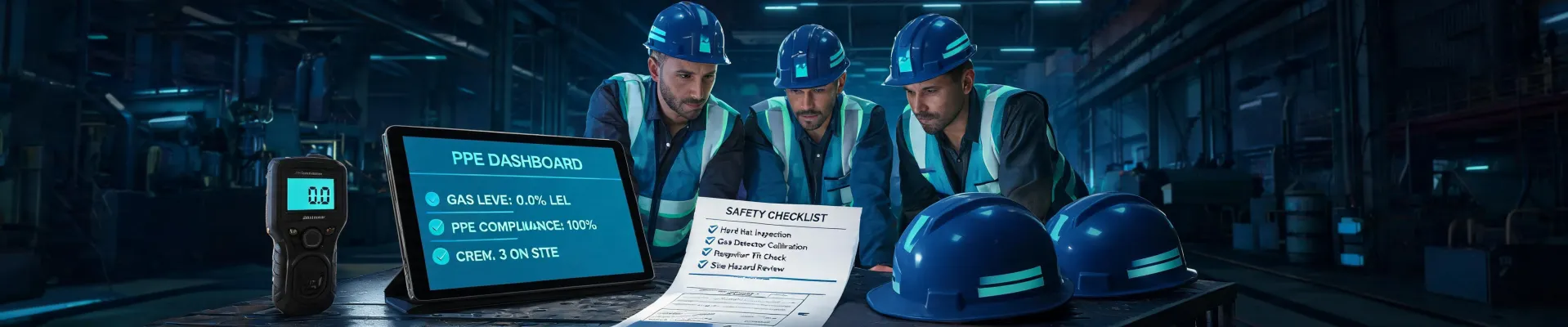
While you're ordering hearing protection, don't forget the hard hats. Peltor also offers head protection, and if you're not sure whether you need Type 1 or Type 2, here's the quick version: Type 1 protects only against top impact (falling objects). Type 2 protects against top and lateral impact (side blows). For most construction sites, Type 1 is sufficient. But if you're working around heavy machinery or in confined spaces with lateral hazards, Type 2 is worth the extra cost. (Source: ANSI/ISEA Z89.1-2014).
I made the mistake of ordering Type 1 for a demolition crew once. The foreman complained that his guys kept getting clocked on the side by swinging pipes. We ended up returning them—and paying restocking fees. Now I always ask: "What's the work environment?" before placing any hard hat order. It took about three weeks—or rather, closer to four when you count the revision cycle—to get the correct Type 2 helmets in. That was a costly lesson in specification.
And While You're At It: 9V Battery for Smoke Detector
This might seem off-topic, but as an admin buyer, you often bundle safety purchases. When I order Peltor hearing protection for a job site, I also check the smoke detectors in our office. A 9V battery for smoke detector units costs around $5-8 per battery (based on Home Depot and Lowe's pricing, December 2024). Don't let a dead battery in a smoke detector become a safety violation. Add them to the same purchase order and save on shipping.
But again: don't skimp on delivery for critical safety items. If you need a 9V battery by Friday, pay for the faster shipping. It's not worth the hassle of a last-minute run to the store. I've done that dance—driving to three stores because the first two were out of stock. Not fun.
When You Can Safely Save: Boundary Conditions
I'm not saying you should always pay for premium delivery. If you have a flexible timeline—say, ordering Peltor earplugs for stock that won't be used for a month—then go with the cheaper option. Also, for occasional, low-risk use (like a single weekend shooting event), consumer-grade earplugs like Vibes might be fine. But for any situation where safety, compliance, or a hard deadline is involved, the time certainty premium is worth it.
In my opinion, the extra 15-25% for guaranteed delivery is the cheapest insurance you can buy. The alternative—missing a deadline, scrambling for replacements, or putting workers at risk—is far more expensive. Granted, this requires more upfront work in vetting vendors. But it saves time later when you're not dealing with late shipments. Let me rephrase that: the upfront effort of finding a reliable vendor pays off tenfold when you're in a crunch.
Prices are for reference only and vary by vendor. Verify current pricing and availability before ordering. Product recommendations are based on personal experience; always consult your safety manager for specific requirements.

Maeve Callahan
Maeve Callahan is a head-protection analyst covering Type I and Type II hard hats, climbing-style safety helmets, bump caps, chin straps, suspensions, liners, and face-shield carriers. She applies ANSI Z89.1, EN 397, and EN 12492 criteria while comparing impact attenuation, penetration resistance, lateral deformation, electrical class, retention strength, field of vision, mass, fit range, and temperature conditioning. Her guides help EHS teams, contractors, utilities, and buyers select helmet systems for overhead hazards, work at height, electrical exposure, accessory compatibility, and worker acceptance.