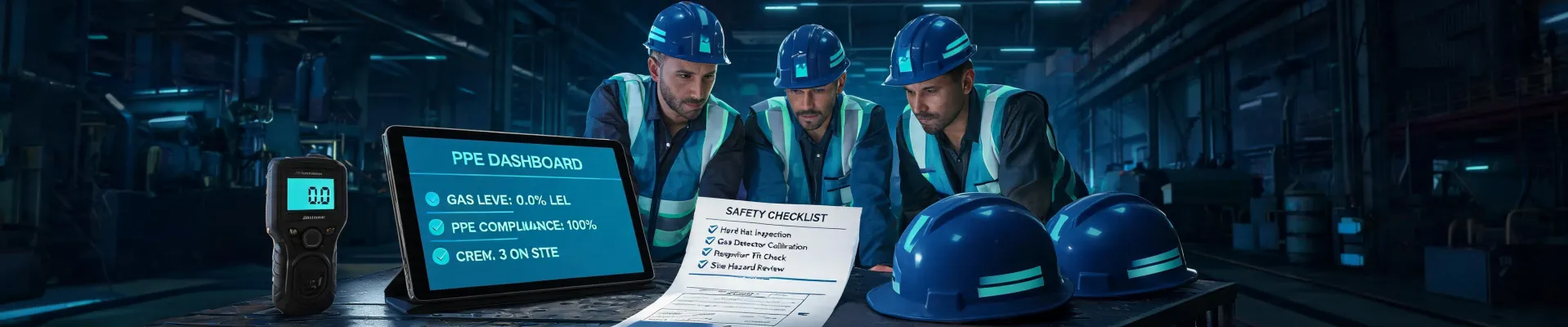
Short answer: the employer is responsible for making sure workers know how and when to use PPE. Under OSHA 29 CFR 1910.132, the employer has to assess hazards, select the right personal protective equipment, provide it, and train affected employees before they perform work that requires it. Employees have to cooperate—wear the gear, report damage, follow the training—but the program is owned by management. That's the law, and it's also the only way safety works in practice.
I've spent the better part of 12 years coordinating emergency and safety equipment for industrial facilities. In that time, I've been part of more than 200 equipment order cycles—routine restocks, audit-driven replacements, and a few genuine emergencies. The most expensive mistakes aren't the ones that fail during a test. They're the ones that fail during an audit.
Here's the thing: PPE is the last line of defense, not the first. It only works when the person responsible for the program, and the people wearing the equipment, know the details.
What "know how and when to use PPE" actually means
OSHA's PPE standard is specific. The training must cover when PPE is necessary, what PPE is necessary, how to put it on and take it off, the limitations of the equipment, and how to care for it. But the rule also says employees have to demonstrate that they understand the training before they're allowed to work. That's not a sign-in sheet.
"Each affected employee shall demonstrate an understanding of the training ... and the ability to use PPE properly, before being allowed to perform work requiring PPE." — 29 CFR 1910.132(f)(2)
In March 2024, a plant manager called me because a gas detector kept alarming near a compressor. The maintenance lead thought the detector was malfunctioning and turned it off. It wasn't attitude—it was a training gap. The company had bought good gas detection equipment, but skipped the "when to use it" conversation. By the time they called me, they had a replacement part number from an online listing and wanted rush delivery. I asked what the manual said. Silence. We found the right component, got the detector recalibrated, and scheduled retraining. The part mattered, but the knowledge mattered more.
Why authorized MSA safety distributors are part of the program
Let's talk about sourcing. MSA Safety is one of the most trusted names in head protection, gas detection, fall protection, and fire service gear. I've specified MSA V-Gard hard hats and ALTAIR gas detectors on many projects. But the brand isn't enough. The MSA safety distributors you use determine whether you get genuine equipment, correct replacement parts, and technical help when something doesn't fit.
I understand the temptation to filter by lowest price. I've also seen counterfeit "V-Gard" shells with no batch traceability and no suspension lock, and replacement gas detector parts that drifted during calibration. In 2023, a client brought me four marketplace hard hats that looked right from across the room. Up close, the shells had no shell label and the suspension clips didn't click into place. Those went in the trash. The client spent more on the rush replacement than they saved on the original deal.
When you search for something like Bacharach MSA Safety 3015-5176, the first thing to do is confirm it against your equipment's manual. A good distributor will ask for the model and serial number before selling a part like that. If a listing won't provide the manufacturer's part number or a document trail, that's a red flag.
Fire extinguisher cabinet: a small detail with big consequences
Real talk: I've walked into plants where the fire extinguisher cabinet looks fine from a distance. Up close, it's blocked by a pallet, the door is zip-tied shut, or the inspection tag expired long ago. A fire extinguisher cabinet is a passive safety device. Its only job is to make the extinguisher accessible at the moment it's needed.
NFPA 10, the standard for portable fire extinguishers, says that for extinguishers weighing 40 pounds or less, the top should be no more than 5 feet from the floor. OSHA 29 CFR 1910.157 also requires extinguishers to be readily accessible. If a cabinet is locked, the latch has to be the type that can be opened quickly in an emergency. A locked box that keeps people away from an extinguisher isn't a security feature. It's a liability.
What "Vans work boots" gets wrong
I've had more than one client ask about "vans work boots." I get why people type it. But Vans makes skate shoes, not protective footwear. If your hazard assessment calls for impact-resistant or compression-resistant boots, the footwear needs to meet ASTM F2413-18. That mark appears on a label inside the tongue. If you can't find the mark, it's not a work boot in the regulatory sense.
Employer responsibility here is nuanced. OSHA generally requires employers to pay for required PPE, but non-specialty safety-toe footwear is an exception when employees are allowed to wear it off the job. The employer still has to make sure workers know what's acceptable. A worker showing up in Vans sneakers and calling them "basically work boots" is a training gap—and a citation waiting to happen.
The boundary: the employer owns the program, the employee owns participation
I have mixed feelings about how some companies enforce PPE. On one hand, discipline is necessary when someone refuses to wear a harness or ignores lockout/tagout. On the other, if training was a 20-minute video and nobody checked fit, the failure is upstream. The worker didn't fail. The system did.
So my practical rule is this: the employer owns the program, and the worker owns participation. You can't delegate "making sure workers know" to a poster. You can't install a fire extinguisher cabinet and call fire protection done. You can't put "Vans work boots" on your PPE matrix and check the box. Prevention isn't a one-time purchase—it's a set of checks repeated until they're boring.
The cheapest insurance in safety is a checklist. Five minutes of verification beats five days of correction. In safety, it beats a lot worse. If you're building a PPE program, start with the hazard assessment, then the equipment, then the training, then the proof. And if you need MSA Safety gear, work with a distributor who treats the part number like it matters—because it does.
One more thing: I'm a safety equipment coordinator, not a lawyer. If you're making compliance decisions, read the actual standard and bring in a qualified safety professional. This is how the responsibility works in the field—and it's a good place to start.

Maeve Callahan
Maeve Callahan is a head-protection analyst covering Type I and Type II hard hats, climbing-style safety helmets, bump caps, chin straps, suspensions, liners, and face-shield carriers. She applies ANSI Z89.1, EN 397, and EN 12492 criteria while comparing impact attenuation, penetration resistance, lateral deformation, electrical class, retention strength, field of vision, mass, fit range, and temperature conditioning. Her guides help EHS teams, contractors, utilities, and buyers select helmet systems for overhead hazards, work at height, electrical exposure, accessory compatibility, and worker acceptance.